
Blockchain's Secret 1,000 Year History
Blockchain could be the most significant development in the storage and sharing of knowledge since the advent of the internet itself – its ability to share information across untrusted parties has the potential to disrupt everything from banking to politics.
But Blockchain has a secret history, one that stretches back over 1,000 years.
“Like all breakthroughs, Blockchains are a profoundly new way of doing old things,” Natalie Smolenski, a cultural anthropologist and the VP of business development at Learning Machine, told Forbes at the Global Education and Skills Forum in Dubai.
But there is always something of the old in the new.
Smolenski is currently working on a book that shows how Blockchain is no different, and in fact shares similarities with the traditions of some of the world’s most ancient tribes.
From Fei stones to Bitcoins
In 500AD the people of the tiny Micronesian island of Yap had a problem.
Their society had landed on a rather strange form of currency, which they used to trade between people in their villages.
Fei stones, many of which still exist today, are huge limestone stone discs which can weigh up to four metric tons and required a wooden pole placed through their center and several villagers to move them around.
The obvious problem with Fei stones as a currency is that, while attractive to look at, they were hardly practical to move around when buying and selling.
So, instead of moving the stones, the people of Yap developed what could be the first recorded example of a decentralized ledger.
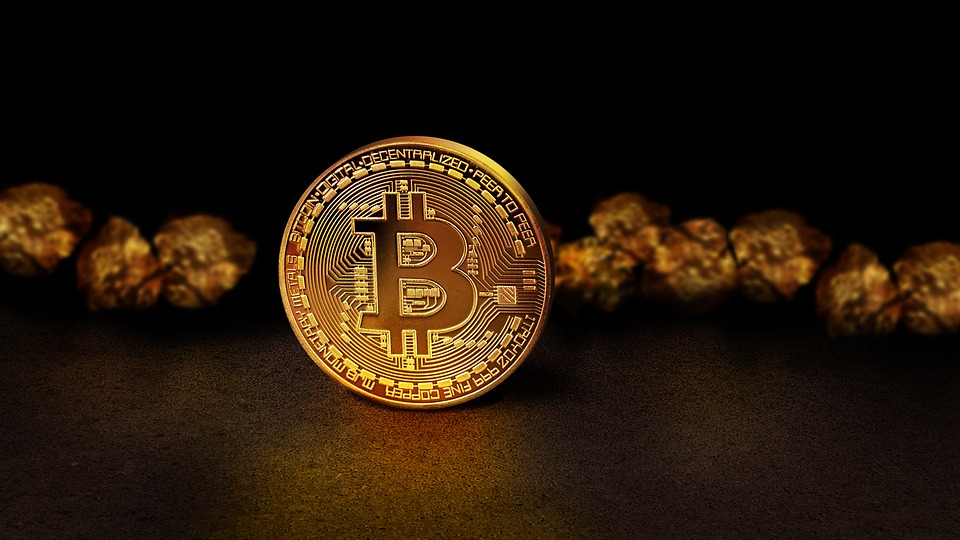 |
| Pixabay |
Centralized vs. decentralized
“…Indeed centralized ledgers continue to power the global economy and are used by the world’s governments to this day.
But the people of Yap in 500AD came up with an alternative solution for their Fei stone problem – rather than recording their ledger centrally, they distributed the knowledge of Fei stone ownership across all the people of their village.
Every villager kept a mental record of who owned each stone, who they got it from, and when that transaction took place.
When a Fei stone was spent, that new transaction was shared across the village people to update everyone’s mental map – just like a very ancient, early take on Blockchain.
If someone came along and tried to wrongly claim a stone was theirs, the village could consult its mental ‘decentralized ledger’.
If this all sounds similar, that’s because it’s exactly how Bitcoin transactions take place today on the Blockchain, albeit now between computers rather than people…”
By Oliver Smith
The article was originally published on Forbes.